Roof Valley Leaks: Why They Happen and What to Do
Roof valleys leak because they channel the most water on your roof. Here's why they fail in Baytown's climate, how to spot it, and what repair really costs.
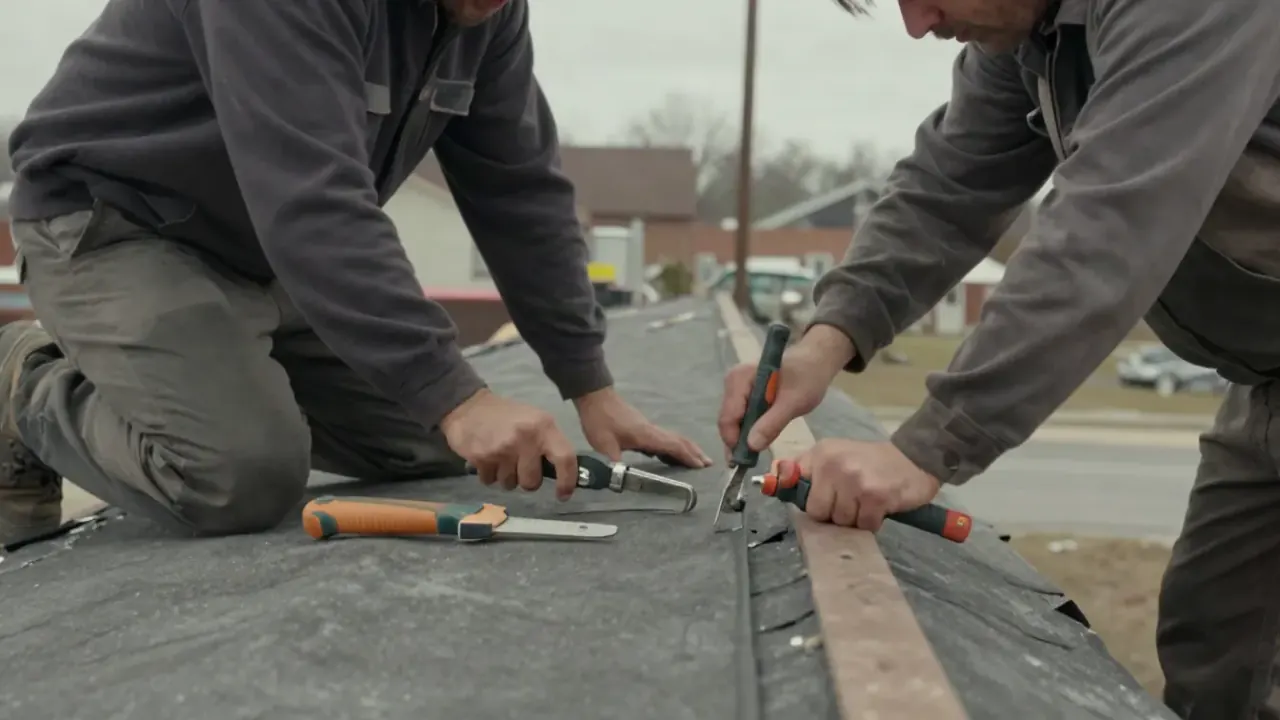
Roof valley leaks happen because the valley is the one place on your roof where two planes of shingles meet and dump every drop of water they collect into a single channel. That channel carries more concentrated flow than any other part of the roof, so when the underlayment, metal, or shingle weave fails there, water finds the deck fast. Roof valley leaks why they happen comes down to three things: volume, debris, and age. This post walks through the causes we see across Baytown, the warning signs, how repairs actually work, and what it costs in 2026.
Why Roof Valleys Leak in the First Place
A roof valley is the V-shaped intersection where two sloping roof planes meet, and it is designed to move hundreds of gallons of water per storm off your roof. Roof valley leaks why they happen is a question of physics more than bad luck: water accelerates through the valley, and any gap in the layers underneath gets tested every time it rains.
There are four failure points we find over and over:
- Open valley metal corrosion. The galvanized or aluminum W-metal in an open valley can rust through in 10-15 years near the coast, where salt air speeds up oxidation.
- Woven shingle breakdown. On woven valleys, the shingles are interlaced and the edges take the full force of runoff. Granule loss exposes the mat, and the mat cracks.
- Underlayment failure. Felt or synthetic underlayment under the valley dries out, tears, or was never overlapped correctly to begin with.
- Debris dams. Pine needles, oak tassels, and shingle grit pile up in the valley and hold water against the roof deck instead of letting it run off.
Any one of those can let water in. Two or three together and you have a leak that shows up on the ceiling within a week of the next hard rain.
Why Do Roof Valleys Leak in Baytown TX?
Roof valleys leak in Baytown TX faster than in most of the country because of our specific combination of humidity, hurricane-season wind-driven rain, and salt air coming off Galveston Bay. A valley that would last 20 years in dry West Texas is often done in 12-14 here.
Three local factors do most of the damage:
- Wind-driven rain. During a tropical system, rain doesn't fall - it drives sideways at 40-70 mph. That pushes water up under shingle edges in the valley, past the metal, and onto the underlayment.
- Year-round humidity. Baytown averages around 75% relative humidity. That keeps roof decks damp, which accelerates rust on valley metal and rot in the decking once water gets in.
- Salt air. Homes closer to the bay - especially in Bay Oaks Harbor Roof Leak Repair territory - see faster corrosion on fasteners, valley metal, and flashing than inland neighborhoods.
We also see a lot of valleys fail on homes built in the 1970s and 1980s around Goose Creek Roof Leak Repair neighborhoods, where the original roof has been re-covered once and the valley metal was never replaced. The new shingles look fine. The metal underneath is rusted through.
Signs You Have a Valley Leak (Before the Ceiling Stains)
Valley leaks almost always telegraph themselves before water reaches your ceiling, and catching them early is the difference between a $400 repair and a $3,000 deck rebuild. Here's what to look for.
From the ground
- Dark streaks running down the valley line after rain.
- Granules collecting in gutters below the valley - a sign the shingles there are shedding their protective surface.
- Visible rust or a bright silver line where the valley metal has worn through its coating.
- Shingle edges curling or lifting along the valley cut.
From inside the attic
- Water stains on rafters or decking directly under the valley line.
- Daylight visible through the roof deck - never a good sign.
- Soft or spongy decking when you press on it with a screwdriver handle.
- A musty smell that gets stronger after rain.
If you're already seeing brown rings on the ceiling, the leak has been active for a while. That's when we recommend a Ceiling Water Stain Investigation Baytown TX - the stain is rarely directly under the actual entry point, and chasing it from the ceiling side wastes time and drywall.
How to Fix Roof Valley Leaks: What Actually Works
How to fix roof valley leaks depends entirely on what failed. There is no single patch that solves every valley leak, and anyone who tells you otherwise is selling you a callback. Here's how we approach it.
1. Diagnose before you touch anything
We run a hose test on the valley from the bottom up, in sections, while a second person watches the attic. That tells us exactly where the water is entering - not where it's showing up. Nine times out of ten the entry point is 3-6 feet uphill from the stain.
2. Repair the layer that failed
- Debris dam only: clear the valley, flush it, and you're done. Cost: usually under $250.
- Valley metal corroded: remove shingles 12-18 inches back from the valley on both sides, replace the W-metal, re-weave or re-cut the shingles, and re-seal. This is the most common repair we do.
- Underlayment torn: same access, new ice-and-water shield or synthetic underlayment, then re-shingle.
- Deck rot: cut out the rotted plywood, sister in new decking, then rebuild the valley. This is where costs climb.
3. Test it before we leave
Every valley repair gets a second hose test after the shingles go back down. If it leaks, we're still on the roof - not scheduling a return trip.
For valleys that are structurally sound but aging, we sometimes recommend Roof Sealing and Coating Baytown TX as a preventive layer over the valley and surrounding field. It buys you 3-5 years on a roof you're not ready to replace.
Roof Valley Maintenance That Prevents Repeat Leaks
Roof valley maintenance is the cheapest insurance you can buy against a repeat leak, and most of it takes 20 minutes twice a year. In Baytown, timing matters more than effort.
Here's the schedule we give our customers:
- Late October (now): clear leaves, pine needles, and shingle grit out of every valley before winter rains start. This is the single highest-value task on the list.
- March: inspect valley metal for rust and shingle edges for lifting after winter storms.
- June 1: pre-hurricane-season inspection. Check valley metal fasteners, look for lifted shingles, and confirm the valley is clear. Hurricane season runs June 1 through November 30.
- After any named storm: walk the perimeter and look up at the valleys. If shingles are missing or the valley metal is exposed, call before the next rain.
If your roof is over 15 years old and has never had the valleys inspected, a $200-$350 inspection now is cheaper than a $2,500 interior repair later.
Common Mistakes We See Homeowners Make
The mistakes we see on valley leaks are almost always about treating the symptom instead of the source, and they cost homeowners real money. Here are the ones that show up most.
- Sealing the valley from the outside. Roofing cement smeared over a valley looks like a fix for about one season. Water still gets in underneath, and now we have to remove the cement to find the real problem.
- Patching the ceiling stain. Kilz and paint hide the evidence. The leak keeps running, the deck keeps rotting, and the eventual repair is bigger.
- Assuming the leak is above the stain. Water travels along rafters and decking. A stain in the middle of a room can come from a valley 10 feet away.
- Letting a handyman re-weave a valley. Valley weaving is one of the few roof details where technique actually matters. Done wrong, it channels water under the shingles instead of over them.
- Ignoring the second valley. Most Baytown homes have two or more valleys. If one failed, the others are on the same clock.
When to Call a Professional
Call a professional the moment you see water in the attic, daylight through the deck, or a ceiling stain that grows after rain - those are not DIY situations. Valley repair requires getting on the roof, removing shingles in a specific pattern, and re-laying them so the water path is correct. Done wrong, it makes the leak worse.
At Baytown Roof Leak Repair, we handle valley leaks every week across the area. We find the leak, fix it, and hose-test the repair before we leave. If you're not sure whether your valley is the problem, we'll tell you straight - sometimes it's flashing, sometimes it's a pipe boot, and sometimes it's the valley. We'd rather diagnose it right than sell you a repair you don't need.
Frequently Asked Questions
Why is my roof valley leaking?
Your roof valley is leaking because the metal, underlayment, or shingle weave that channels water through the V has failed - usually from corrosion, debris buildup, or wind-driven rain pushing water under the shingle edges. In Baytown, salt air and hurricane-season storms accelerate all three.
How do I repair a roof valley leak?
Repair depends on the failure. Clear debris first; if that doesn't stop it, the valley metal or underlayment needs replacement, which means removing shingles 12-18 inches back on both sides, replacing the failed layer, and re-weaving the shingles. Hose-test after the repair.
How much does roof valley repair cost in Baytown TX?
Typical 2026 pricing in Baytown runs $350-$650 for a debris clear and minor reseal, $700-$1,400 for valley metal replacement, and $1,500-$3,500 if deck rot has to be cut out and rebuilt. Most single-valley repairs land in the $700-$1,100 range.
Can I just seal the valley with roofing cement?
No. Roofing cement over a valley is a temporary patch that fails within a season and hides the real problem. Water still enters underneath, and the cement has to be removed before a proper repair can be done.
How long does a valley repair take?
Most valley repairs take 3-6 hours on site, including diagnosis and hose testing. If deck rot is involved, plan on a full day. We schedule most Baytown valley repairs within 24-48 hours of the call.
Get Help with Roof Leak Repair in Baytown
If you've got water coming in through a valley, we can be on your roof this week. We diagnose it, fix it, and test it before we leave - no guesswork, no callbacks.
Call Baytown Roof Leak Repair at (281) 306-5579 for same-week valley leak repair across Baytown and the surrounding areas.